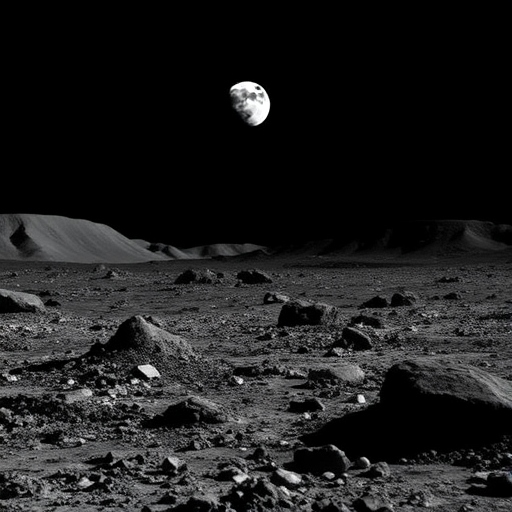

High-Energy Particle Collisions: 5 Exciting Discoveries Shaping Physics

High-energy particle collisions are at the heart of modern physics, offering a powerful way to explore the fundamental nature of matter and energy. By smashing particles together at near-light speeds in particle accelerators, scientists can break apart subatomic particles to investigate the forces and interactions that govern the universe. This field has yielded groundbreaking discoveries that have not only deepened our understanding of physics but also advanced technology in ways that benefit society.

In this article, we explore five major discoveries made possible by high-energy particle collisions and how they have reshaped the landscape of modern physics. From the Higgs boson to the search for dark matter, these advancements illuminate the critical role of high-energy experiments in solving the mysteries of existence.

1. Discovery of the Higgs Boson

One of the most celebrated achievements in high-energy physics is the discovery of the Higgs boson in 2012 at CERN’s Large Hadron Collider (LHC). Often referred to as the “God particle,” the Higgs boson is a cornerstone of the Standard Model of particle physics. Its existence was predicted in the 1960s by Peter Higgs and others, but it took decades of technological advancements and high-energy particle collisions to finally confirm its presence.

The Higgs boson is responsible for giving mass to other particles through the Higgs field, a pervasive energy field that interacts with certain particles. Without the Higgs mechanism, the universe as we know it would not exist. The discovery was made possible by smashing protons together at unprecedented energies and analyzing the resulting debris. This triumph was a defining moment for particle collisions and subatomic particle analysis, proving that theory and experiment could come together to unveil new truths about nature.

The impact of this discovery extends beyond pure science. The technology developed to detect the Higgs boson, including advanced data processing techniques and high-precision sensors, has influenced innovations in fields such as medical imaging and computing, High-Energy Particle Collisions.

2. Confirmation of Quarks and Gluons

In the mid-20th century, the existence of quarks, the fundamental building blocks of protons and neutrons, was theorized but unproven. It wasn’t until the advent of high-energy collisions in particle accelerators that the quark model was confirmed. Particle accelerators such as the Stanford Linear Accelerator Center (SLAC) and CERN provided the energy needed to smash particles and reveal quarks within hadrons.

Quarks are held together by gluons, the carriers of the strong nuclear force, which binds atomic nuclei. Through discoveries from particle collision experiments, physicists observed how gluons mediate interactions between quarks. This breakthrough solidified the framework of quantum chromodynamics (QCD), a key component of the Standard Model.

The role of quarks and gluons in matter formation demonstrates how high-energy particle collisions contribute to understanding the building blocks of reality. The experimental confirmation of these particles not only validated theoretical models but also paved the way for more sophisticated studies into the strong force, one of the four fundamental forces of nature.

3. Uncovering the Nature of Antimatter

Antimatter has intrigued scientists since its theoretical prediction in the early 20th century. High-energy physics has been instrumental in producing and studying antimatter particles, such as positrons (the antimatter counterparts of electrons) and antiprotons. High-energy particle collisions allow physicists to generate and observe these elusive particles in controlled environments.

Experiments at CERN’s Antiproton Decelerator have been vital in understanding how antimatter behaves and interacts with matter. This research has implications for everything from theoretical cosmology to practical technologies like positron emission tomography (PET) scans in medical diagnostics. The continued study of antimatter through high-energy experiments at CERN and beyond seeks to answer one of the most profound questions in physics: why does the universe contain more matter than antimatter?

High-Energy Particle Collisions

4. Exploration of Dark Matter and Dark Energy

While dark matter and dark energy remain among the greatest mysteries in physics, high-energy particle collisions play a critical role in the search for these elusive components of the universe. Dark matter, which makes up about 27% of the cosmos, does not emit, absorb, or reflect light, making it invisible to direct observation. However, its gravitational effects on galaxies suggest its existence.

Experiments at the LHC and other particle accelerators attempt to create dark matter particles by recreating the conditions of the early universe. Supersymmetry, a theoretical framework that extends the Standard Model, predicts the existence of particles that could explain dark matter. Collisions involving high energies are essential for testing these theories, as they produce the rare and exotic particles that may reveal the nature of dark matter.

High-energy experiments at CERN and beyond continue to push the boundaries of our knowledge, with detectors designed to capture the subtle signals of dark matter interactions. These endeavors highlight how high-energy particle collisions connect the microscopic world of particle physics to the vast expanse of cosmology.

5. Evidence for the Early Universe and Cosmic Evolution

The study of high-energy particle collisions offers a glimpse into the conditions of the universe moments after the Big Bang. In these extreme environments, temperatures and densities are so high that ordinary matter breaks down into a quark-gluon plasma, a state believed to have existed in the first microseconds of cosmic history.

Experiments conducted at the Relativistic Heavy Ion Collider (RHIC) and the LHC have recreated this plasma, providing valuable insights into the behavior of matter under extreme conditions. By studying how quarks and gluons interact in this state, physicists gain a better understanding of how the universe evolved from its earliest moments to its current structure.

Advancements in high-energy physics technology have made it possible to probe these extreme states of matter, connecting the smallest particles to the largest-scale phenomena. This interplay between particle physics and cosmology underscores the unifying power of science in explaining the universe’s origins.
The Role of High-Energy Physics in Future Discoveries

The discoveries made possible by high-energy particle collisions have already transformed our understanding of physics, but many unanswered questions remain. What lies beyond the Standard Model? Are there undiscovered particles or forces waiting to be found? Future projects, such as the proposed Future Circular Collider (FCC) at CERN, aim to reach even higher energy levels to explore these mysteries.

The development of more powerful accelerators and more sensitive detectors will enable deeper insights into uncharted territory. The role of high-energy physics in science is not just about solving theoretical puzzles; it drives technological advancements that benefit society in areas such as energy generation, materials science, and computing.

Conclusion

High-energy particle collisions are a cornerstone of modern physics, providing unparalleled insights into the universe’s fundamental workings. From confirming the Higgs boson to exploring the mysteries of dark matter, these collisions enable discoveries that reshape our understanding of nature. The advancements in technology and theory driven by these experiments demonstrate the interconnectedness of physics, technology, and society. As future generations of scientists build on these achievements, high-energy particle collisions will remain at the forefront of scientific exploration, continuing to illuminate the deepest questions about existence and reality.

 If you want to read more:  CLICK HERE

Dark Matter Exploration: 7 Theories About the Universe’s Hidden Mass

The universe as we know it is shaped by forces and substances that remain mysterious to modern science. Among these enigmas, dark matter stands as one of the most compelling and elusive. Accounting for approximately 85% of the universe’s mass, dark matter cannot be directly observed or detected by traditional means, yet its gravitational effects are unmistakable. Dark matter exploration continues to push the boundaries of physics and cosmology, as scientists search for answers to this profound cosmic mystery.

This article delves into 7 theories about dark matter, highlighting its role in shaping the universe, the challenges of detecting it, and how experimental research is shedding light on its hidden truths.

1. Dark Matter as WIMPs (Weakly Interacting Massive Particles)

The Theory:

One of the leading explanations in dark matter exploration is that it consists of weakly interacting massive particles (WIMPs). These particles are believed to have mass but interact with regular matter only through gravity and the weak nuclear force, making them incredibly difficult to detect.

Why WIMPs Are Popular:

  • They fit well into the framework of particle physics and the Standard Model.
  • Their properties could explain the formation of galaxies and large-scale cosmic structures.

Experimental Research:

  • Underground detectors, such as those in the Xenon1T and LUX-ZEPLIN experiments, aim to identify rare interactions between WIMPs and normal matter.
  • Thus far, these experiments have yielded no definitive results, but the search for dark matter particles continues.

While the WIMP hypothesis dominates, other dark matter theories in modern physics propose alternative candidates.

2. Axions: A Lightweight Candidate

The Theory:

Axions are ultra-light particles that could provide a compelling explanation for dark matter. Unlike WIMPs, axions are predicted to have extremely low mass and interact with electromagnetic fields rather than weak nuclear forces, Dark Matter Exploration.

Why Axions Are Intriguing:

  • They could solve puzzles in quantum chromodynamics (QCD) while also serving as dark matter.
  • Axions are thought to create a “background field” that influences the behavior of photons in certain conditions, Dark Matter Exploration.

Detection Efforts:

  • Experiments like ADMX (Axion Dark Matter eXperiment) use magnetic fields to detect the faint signals that axions might produce.
  • These efforts are a key part of experimental research on dark matter detection and provide alternative pathways for understanding the universe’s hidden mass.

3. Dark Matter as Primordial Black Holes

The Theory:

Some physicists speculate that dark matter might consist of primordial black holes, formed shortly after the Big Bang. These black holes, much smaller than the ones created by collapsing stars, could explain some of dark matter’s gravitational effects.

Evidence Supporting This Theory:

  • The detection of gravitational waves from merging black holes by LIGO and Virgo collaborations has revived interest in this idea.
  • Primordial black holes would have the necessary mass to account for dark matter’s influence on galaxies.

Challenges:

  • The theory struggles to explain all observations related to dark matter exploration, such as the distribution of dark matter in galaxies.
  • Direct evidence of primordial black holes remains elusive.

While this theory offers intriguing possibilities, it competes with particle-based explanations for dark matter.

Dark Matter Exploration

4. Modified Gravity: A Challenge to Dark Matter

The Theory:

Rather than invoking new particles or substances, some physicists suggest that our understanding of gravity needs modification. Modified Newtonian Dynamics (MOND) and other theories propose that gravitational laws behave differently at cosmic scales, eliminating the need for dark matter.

Key Points of the Theory:

  • MOND posits that gravity weakens less than expected in regions of low acceleration, explaining galaxy rotation curves without dark matter.
  • Another approach, known as TeVeS (Tensor-Vector-Scalar Gravity), combines Einstein’s general relativity with additional fields.

Criticisms:

  • Modified gravity struggles to explain phenomena like galaxy cluster collisions observed in the Bullet Cluster, where dark matter’s gravitational effects are inferred without corresponding visible matter.
  • Theories of modified gravity face significant challenges in aligning with other observations in dark matter exploration and cosmic mysteries.

5. Dark Matter as Sterile Neutrinos

The Theory:

Neutrinos are nearly massless particles that pass through matter almost undetected. Some scientists propose the existence of a “sterile” neutrino, a heavier version of the neutrino that could account for dark matter.

Why It Matters:

  • Sterile neutrinos would expand the Standard Model of particle physics while solving several cosmological puzzles.
  • They could explain the formation of structures in the universe, particularly in the early stages of galaxy formation.

Detection Challenges:

  • Sterile neutrinos are predicted to interact even less frequently than regular neutrinos, making them incredibly difficult to detect.
  • Observatories like IceCube and Fermilab continue to search for evidence of these elusive particles in their efforts toward dark matter exploration.

6. Self-Interacting Dark Matter

The Theory:

Self-interacting dark matter (SIDM) proposes that dark matter particles can interact with one another via a new force, rather than being entirely non-interactive. This interaction could help explain certain cosmic phenomena that standard dark matter models struggle with.

Key Advantages:

  • SIDM could explain the distribution of dark matter in galaxies, which appears less dense in their centers than predicted by non-interacting models.
  • It offers potential insights into dark matter’s role in shaping the universe by altering the behavior of galaxy clusters.

Current Research:

  • Simulations of galaxy formation incorporating SIDM are being developed to test this hypothesis.
  • SIDM remains a compelling alternative to WIMP-based theories in dark matter exploration.

7. The Multiverse Connection

The Theory:

Some physicists speculate that dark matter might originate from a parallel universe or another dimension, making it undetectable in our own. This theory ties into speculative ideas about the multiverse and higher-dimensional physics.

Possible Mechanisms:

  • Dark matter could be composed of particles that interact primarily with forces in another dimension, leaking only gravity into our universe.
  • This aligns with certain string theory models and other theoretical frameworks in modern physics.

Challenges:

  • While intriguing, multiverse-based explanations for dark matter are highly speculative and difficult to test experimentally.
  • Nonetheless, they remain a fascinating aspect of dark matter exploration and cosmic mysteries.

The Role of Dark Matter Exploration in Understanding the Universe

Dark matter exploration is central to modern physics and cosmology, offering insights into the structure and evolution of the universe. By studying dark matter, scientists hope to:

  • Uncover the hidden truths about dark matter’s existence and its relationship with ordinary matter.
  • Solve longstanding questions about the formation of galaxies, stars, and other cosmic structures.
  • Develop new theories that expand or refine the Standard Model of particle physics.

Despite decades of research, the nature of dark matter remains elusive, making it one of the most compelling frontiers in science.

Conclusion

Dark matter exploration continues to challenge and inspire scientists as they seek to unravel the universe’s hidden mass. From theories about WIMPs and axions to the possibility of primordial black holes and modified gravity, the search for answers is as diverse as it is profound.

As experimental techniques advance and new observations are made, humanity edges closer to solving one of the greatest cosmic mysteries. Whether through the detection of elusive particles or groundbreaking insights into gravity, dark matter exploration promises to reshape our understanding of the universe and its fundamental workings.

If you want to read more:  CLICK HERE

Subatomic Particle Discoveries: 6 Revolutionary Findings in Physics

The world of subatomic particle discoveries has transformed our understanding of the universe, revealing the fundamental building blocks of matter and the forces that govern them. From the early identification of protons and neutrons to the elusive Higgs boson, each breakthrough has deepened our grasp of quantum mechanics and the Standard Model of particle physics. Advanced research and powerful particle colliders have pushed the boundaries of what we know, leading to revolutionary findings with far-reaching implications for technology and the cosmos.

In this comprehensive exploration, we examine six groundbreaking subatomic particle discoveries that have shaped modern physics, highlighting their significance, the experiments that led to them, and the unanswered questions they pose, Subatomic Particle Discoveries.

1. The Discovery of the Electron: The First Subatomic Particle

One of the earliest and most important subatomic particle discoveries was the electron, identified by J.J. Thomson in 1897. Before this finding, atoms were thought to be the smallest indivisible units of matter. Thomson’s cathode ray tube experiment demonstrated that negatively charged particles, much smaller than atoms, were emitted from electrodes when subjected to an electric current.

This discovery fundamentally changed scientific thinking about atomic structure. Thomson’s model proposed that electrons were embedded within a positively charged sphere, a concept later refined by Rutherford and Bohr. The identification of the electron paved the way for future breakthroughs in understanding subatomic particles and became a cornerstone of modern atomic theory.

Today, electrons play a critical role in chemistry, electronics, and computing technologies. Their behavior underlies electrical conductivity and forms the basis of quantum mechanics, illustrating how early subatomic particle experiments and their results continue to impact everyday life, Subatomic Particle Discoveries.

Subatomic Particle Discoveries

2. The Proton and Neutron: The Nucleus Comes into Focus

Following the discovery of the electron, scientists turned their attention to the atomic nucleus. In 1917, Ernest Rutherford identified the proton, a positively charged particle located in the nucleus. His famous gold foil experiment demonstrated that atoms have a dense core, contradicting earlier models that portrayed atoms as diffuse clouds of positive charge.

Later, in 1932, James Chadwick discovered the neutron, a neutrally charged particle also residing in the nucleus. The identification of protons and neutrons solidified the nuclear model of the atom, offering a more complete picture of atomic structure. These findings were pivotal in developing nuclear physics and the subsequent exploration of nuclear energy.

The proton and neutron are both composite particles made of quarks, as described by the Standard Model. Their interactions via the strong nuclear force are studied using particle accelerators, contributing to ongoing advances in subatomic research at particle colliders. The understanding of these particles laid the groundwork for later discoveries of new particles in quantum physics.

3. The Positron: Antimatter Becomes Reality

One of the most exciting subatomic particle discoveries was the positron, the first confirmed particle of antimatter. Predicted by Paul Dirac in 1928 and observed by Carl Anderson in 1932, the positron has the same mass as an electron but carries a positive charge. Anderson’s discovery occurred while studying cosmic rays, where he detected particles with opposite trajectories in a magnetic field, Subatomic Particle Discoveries.

The existence of antimatter challenged conventional notions of matter and raised profound questions about the universe’s composition. Positrons have practical applications today, notably in positron emission tomography (PET) scans used for medical imaging. The discovery also sparked deeper investigations into symmetry and particle-antiparticle pairs, themes central to modern quantum mechanics.

Antimatter remains an area of active research, with experiments at particle colliders continuing to explore its behavior and potential for energy generation. Understanding the asymmetry between matter and antimatter in the early universe is one of the great mysteries driving current subatomic particle experiments and their results.

4. The Muon: A Surprising Member of the Particle Zoo

In 1936, Carl Anderson and Seth Neddermeyer discovered the muon, a particle similar to the electron but 207 times heavier. The unexpected nature of the muon led physicist I.I. Rabi to famously quip, “Who ordered that?” This discovery highlighted the growing complexity of the subatomic world and the emergence of what would later be called the particle zoo—a collection of numerous particles beyond the familiar electron, proton, and neutron, Subatomic Particle Discoveries.

The muon plays a critical role in tests of the Standard Model. Recent research on the anomalous magnetic moment of the muon, conducted at Fermilab, suggests deviations from theoretical predictions, hinting at possible new physics. Advances in subatomic research at particle colliders continue to investigate this phenomenon, potentially pointing to unknown particles or forces beyond the Standard Model.

Muons are also used in practical applications, such as muon tomography, which can penetrate dense materials to create images of structures like pyramids and volcanic interiors. The discovery of the muon exemplifies how subatomic particle discoveries often lead to unexpected insights and technologies.

5. The Quark Model: The Substructure of Hadrons

In the 1960s, Murray Gell-Mann and George Zweig independently proposed the quark model, a framework that explained the structure of protons, neutrons, and other hadrons. Quarks are fundamental particles that combine in specific ways to form baryons (such as protons and neutrons) and mesons. The model introduced six flavors of quarks: up, down, charm, strange, top, and bottom.

The discovery of quarks and their interactions revolutionized subatomic particle discoveries and refined the Standard Model. Experiments at particle accelerators confirmed the existence of quarks, providing a deeper understanding of the strong nuclear force mediated by gluons. Today, quark-gluon plasma research explores conditions similar to those just after the Big Bang, offering insights into the universe’s earliest moments.

Quarks remain central to ongoing discoveries of new particles in quantum physics, with research at facilities like CERN and Fermilab continuing to probe their behavior and properties. The quark model unified many previously discovered particles under a single theoretical framework, demonstrating the power of elegant mathematical models in physics.

Subatomic Particle Discoveries

6. The Higgs Boson: Completing the Standard Model

The discovery of the Higgs boson in 2012 at CERN’s Large Hadron Collider was one of the most anticipated and celebrated subatomic particle discoveries in history. The Higgs boson, often called the “God particle,” was the missing piece of the Standard Model, confirming the existence of the Higgs field responsible for giving particles their mass.

Theoretical physicist Peter Higgs first proposed the particle in the 1960s, and its discovery required decades of technological advancements and international collaboration. Detecting the Higgs boson involved smashing protons together at near-light speeds and analyzing the resulting particle decay patterns. This monumental achievement validated a key aspect of modern physics and earned Higgs and François Englert the 2013 Nobel Prize in Physics.

The study of the Higgs boson continues to drive advances in subatomic research at particle colliders, exploring questions about mass generation, symmetry breaking, and potential connections to dark matter. The Higgs field’s implications for the universe’s structure remain a fertile area for theoretical and experimental research.

Conclusion

The realm of subatomic particle discoveries is one of continuous exploration and profound insight. From the electron to the Higgs boson, each breakthrough has expanded our understanding of the universe’s fundamental nature. The intricate web of particles and forces described by the Standard Model provides a robust framework, yet mysteries remain, including the nature of dark matter, the imbalance of matter and antimatter, and the potential for physics beyond current theories.

As technology advances and new experiments push the boundaries of human knowledge, future subatomic particle discoveries will likely reshape science in ways we cannot yet imagine. Whether unlocking the secrets of the early universe or paving the way for revolutionary technologies, the quest to understand the subatomic world continues to captivate and inspire.

If you want to read more:  CLICK HERE

Vaccine Ingredients Debate: 8 Facts to Clear the Confusion

The vaccine ingredients debate has been a contentious topic for years, with critics and proponents passionately arguing about the safety and necessity of various components in vaccines. Misinformation, sensational headlines, and social media have amplified concerns about what goes into vaccines, fueling doubts and fears about their safety. While vaccines have played a crucial role in eliminating and controlling life-threatening diseases, the presence of certain substances has sparked controversies over potential health risks.

This article aims to clear the confusion surrounding the vaccine ingredients debate by examining the facts about common components, debunking myths, and addressing the science behind vaccine safety. Understanding the truth about vaccine ingredients can help foster informed decisions and increase public confidence in immunization programs.

1. Understanding Common Vaccine Components

One of the most misunderstood aspects of the vaccine ingredients debate is the purpose of the substances included in vaccines. Vaccines contain various components, each playing a specific role in ensuring safety, efficacy, and stability. These ingredients typically include:

  • Antigens: The active component that stimulates the immune system to produce a protective response. Examples include weakened or inactivated viruses and bacterial proteins.
  • Adjuvants: Substances like aluminum salts that enhance the immune response, allowing for smaller doses of the antigen.
  • Preservatives: Compounds like thimerosal, used to prevent contamination in multi-dose vials.
  • Stabilizers: Ingredients such as sugars and gelatin that maintain vaccine potency during storage.

The inclusion of these components is supported by extensive scientific research, and each ingredient is tested rigorously to ensure safety. Detractors often cite the presence of certain chemicals without understanding their function or dosage. This lack of context contributes to misconceptions that fuel the vaccine ingredients debate.

Vaccine Ingredients Debate

2. Aluminum Salts: A Safe and Effective Adjuvant

One of the most common arguments in the vaccine ingredients debate revolves around the use of aluminum salts as adjuvants. Aluminum compounds have been used in vaccines for over 70 years to enhance the immune response. Critics raise concerns about aluminum toxicity, but it’s essential to differentiate between harmful levels of exposure and the small amounts used in vaccines.

The aluminum content in vaccines is significantly lower than what people consume daily through food and water. Food and Drug Administration (FDA), have confirmed that the levels used in vaccines are safe. Scientific studies have shown no causal link between aluminum in vaccines and long-term health issues.

The vaccine ingredients debate over aluminum stems from a misunderstanding of dose-related toxicity, a concept well-established in toxicology. Small amounts of aluminum help boost immune efficacy without posing significant risks, making them a critical component in vaccine formulations.

3. Thimerosal and the Autism Myth

Thimerosal, a mercury-based preservative, has been one of the most contentious topics in the vaccine ingredients debate. It was used to prevent bacterial contamination in multi-dose vials of vaccines. The presence of ethylmercury, a compound different from the toxic methylmercury found in contaminated fish, sparked fears about neurological damage and autism.

Multiple large-scale studies and reviews by the CDC, WHO, and independent researchers have found no link between thimerosal-containing vaccines and autism. Despite the scientific consensus, the myth persists, partly due to the widespread influence of discredited studies. In response to public concern, thimerosal was removed from most childhood vaccines in the early 2000s, though it remains in some flu vaccines.

The continued focus on thimerosal highlights the persistence of misinformation in the vaccine ingredients debate, despite overwhelming evidence debunking its risks. Understanding the difference between types of mercury and the actual exposure levels in vaccines is crucial to dispelling fears.

4. Formaldehyde: Separating Fact from Fiction

Formaldehyde is another substance often cited in the vaccine ingredients debate. Used in trace amounts to inactivate viruses and detoxify bacterial toxins, formaldehyde is essential for creating safe vaccines. Critics point to its toxicity, but context matters: the human body naturally produces formaldehyde as part of metabolic processes, with levels far exceeding those found in vaccines.

According to the FDA, the amount of formaldehyde in vaccines is minimal and well below the threshold of toxicity. Formaldehyde exposure from vaccines is less than what one would encounter from common household products or natural biological processes.

The vaccine ingredients debate over formaldehyde exemplifies how misunderstandings about chemical safety can fuel unnecessary fear. Dose and exposure duration are critical factors, and the minuscule quantities used in vaccines are harmless.

5. Gelatin and Allergic Reactions

Gelatin, derived from animal collagen, is used as a stabilizer in some vaccines to maintain their potency. The vaccine ingredients debate around gelatin centers on its potential to cause allergic reactions. While rare, allergic responses to gelatin-containing vaccines have been documented, particularly in individuals with existing gelatin allergies.

Vaccine manufacturers have taken steps to mitigate these risks by refining gelatin formulations and improving allergy screening guidelines. For most people, gelatin in vaccines poses no significant health threat. Public health agencies continue to monitor adverse reactions to ensure vaccine safety.

6. Antibiotics in Vaccines

Certain antibiotics, such as neomycin, are used in small amounts to prevent bacterial contamination during vaccine production. The vaccine ingredients debate occasionally includes concerns about antibiotic residues, but the trace amounts present do not contribute to antibiotic resistance or pose harm.

Regulatory bodies require stringent testing to confirm that vaccines meet safety standards before approval. Understanding the role of antibiotics as a protective measure helps dispel myths that vaccines contain harmful or unnecessary chemicals.

7. Polysorbate 80: A Stabilizer Under Scrutiny

Polysorbate 80 is an emulsifier used to keep ingredients blended. It appears in foods, cosmetics, and vaccines. In the vaccine ingredients debate, concerns have been raised about its potential to cause infertility or other adverse effects, often based on misinterpretations of isolated animal studies.

Extensive research in humans shows no evidence linking polysorbate 80 in vaccines to reproductive harm or serious health issues. The amounts used in vaccines are far smaller than those ingested through common foods, making fears about its toxicity unfounded.

8. Addressing Fears About “Toxic Chemicals”

The vaccine ingredients debate frequently revolves around claims that vaccines contain “toxic chemicals.” However, toxicity depends on dose, exposure, and context. Water, salt, and oxygen can be toxic at high levels, yet they are essential to life. Similarly, ingredients in vaccines are used in carefully controlled amounts that have been extensively tested for safety.

Scientific oversight ensures that vaccines undergo rigorous trials before approval. Regulatory agencies continuously monitor vaccine safety, and adverse events are investigated to ensure public confidence. Addressing misconceptions and emphasizing the importance of evidence-based conclusions is critical to resolving the vaccine ingredients debate.

Conclusion

The vaccine ingredients debate reflects the broader challenges of science communication and public trust in medical systems. By examining the purpose, safety, and research behind common vaccine components, we can better understand the difference between valid concerns and myths. Vaccines remain one of the most significant medical advancements in human history, and informed discussions grounded in scientific evidence are essential to maintaining public health and safety.

If you want to read more: CLICK HERE

Space Race Propaganda: 7 Shocking Ways Politics Shaped Lunar Exploration

The space race of the mid-20th century wasn’t just a competition to conquer the cosmos—it was a battleground for political ideologies, national pride, and global influence. The race to the moon between the United States and the Soviet Union during the Cold War became one of the most dramatic chapters in modern history, but it was as much about winning hearts and minds as it was about scientific progress. Space Race Propaganda played a critical role in shaping public perception, bolstering political agendas, and promoting ideological dominance.

In this article, we’ll explore 7 ways politics influenced lunar exploration, delving into the space race political motivations, the controversies surrounding it, and the narratives that were crafted to inspire citizens and outmaneuver rivals on the global stage in Space Race Propaganda.

1. Framing the Space Race as an Ideological Battle

The Context:

The Cold War rivalry between the United States and the Soviet Union wasn’t just about military power—it was a clash of ideologies. The space race became a theater where democracy and capitalism faced off against communism and centralized state control.

Role of Propaganda:

  • Space Race Propaganda framed lunar exploration as a validation of each nation’s political and economic system.
  • The U.S. emphasized innovation driven by freedom and individualism, while the USSR highlighted the collective strength of socialism, Space Race Propaganda.

Examples:

  • When the Soviet Union launched Sputnik in 1957, it was celebrated as proof of communist superiority, triggering fear and urgency in the U.S.
  • The Apollo program, culminating in the moon landing, was portrayed as evidence of American ingenuity and the triumph of democratic ideals.

This ideological framing ensured that every achievement in space was viewed through the lens of global politics, reinforcing national pride and loyalty.

Space Race Propaganda

2. Controlling the Narrative Through Media

The Context:

Media played a crucial role in how the space race was perceived by citizens worldwide. Governments used controlled narratives to inspire their own populations and intimidate rivals.

Role of Propaganda:

  • The U.S. and USSR tightly controlled media coverage, using films, television broadcasts, and news reports as tools of Space Race Propaganda.
  • Each success, such as Yuri Gagarin’s historic spaceflight or Neil Armstrong’s first steps on the moon, was framed as a victory for their respective political systems, Space Race Propaganda.

Impact:

  • The Soviet Union celebrated its early successes, such as the first satellite, the first human in space, and the first spacewalk, to project an image of technological dominance.
  • The Apollo 11 moon landing was broadcast globally, with live coverage aimed at cementing the U.S.’s position as the leader in space exploration.

By shaping public perception through media, both superpowers ensured that the space race reinforced their broader political narratives.

3. Using Lunar Exploration to Bolster Domestic Morale

The Context:

Both the U.S. and the USSR faced internal challenges during the space race, including civil unrest, economic struggles, and questions about government priorities. Space Race Propaganda was used to boost morale and unify citizens around a common goal.

Role of Propaganda:

  • Achievements in space were presented as national victories, designed to inspire pride and distract from domestic issues.
  • Governments used the space race to emphasize progress and modernity, portraying themselves as leaders in innovation and human advancement.

Examples:

  • President Kennedy’s famous 1961 speech, declaring the U.S. goal of landing a man on the moon, rallied Americans during a time of uncertainty.
  • The Soviet Union highlighted its achievements to assert the strength of its centralized system, even as it faced economic difficulties.

This focus on national pride ensured that the space race resonated deeply with citizens, fostering a sense of unity and purpose.

4. Portraying Rival Nations as Inferior

The Context:

The space race wasn’t just about promoting one’s own achievements—it was also about undermining the credibility and competence of the rival superpower. Space Race Propaganda often included narratives that highlighted the failures or shortcomings of the other side.

Role of Propaganda:

  • The U.S. portrayed Soviet secrecy as evidence of a lack of transparency and trustworthiness, while the USSR emphasized the capitalist exploitation behind American advancements.
  • Failures, such as rocket explosions or mission setbacks, were magnified by each side to undermine confidence in the other’s capabilities.

Examples:

  • After the Apollo 1 fire in 1967, the Soviet Union pointed to the tragedy as a symbol of American recklessness.
  • The U.S., in turn, framed Soviet secrecy around their failures as evidence of dishonesty and inferiority.

This use of propaganda ensured that even setbacks became part of the broader ideological struggle.

5. Inspiring Global Influence

The Context:

The space race wasn’t just about winning the Cold War—it was also about influencing nations in the developing world. Space Race Propaganda was used as a tool to win allies and showcase the benefits of aligning with a particular superpower.

Role of Propaganda:

  • Space achievements were showcased to developing nations as proof of the superiority of either the American or Soviet way of life.
  • Both superpowers used their advancements in space to position themselves as leaders of progress and modernization.

Examples:

  • The Soviet Union highlighted its early successes as proof of the strength of socialism, appealing to nations seeking independence from colonial rule.
  • The U.S. used the Apollo program to demonstrate the benefits of capitalism and democracy, aligning its message with the aspirations of newly independent states.

This global outreach ensured that the space race extended beyond the Cold War, shaping alliances and global perceptions.

6. Theories About Propaganda in Lunar Landing Claims

The Context:

One of the most enduring debates surrounding the space race involves the authenticity of the moon landing. Critics claim that the Apollo 11 mission was staged as part of Space Race Propaganda to secure a symbolic victory over the Soviet Union.

Allegations:

  • Conspiracy theories suggest that the moon landing was filmed on Earth, citing anomalies in photos and videos as evidence.
  • Supporters of this theory argue that the U.S. prioritized the appearance of success over actual achievement.

Counterarguments:

  • Extensive scientific evidence, including moon rocks and data from subsequent missions, confirms the authenticity of the lunar landings.
  • Theories about a hoax are often dismissed as misunderstandings or distrust of authority rather than genuine evidence of deception.

While these claims remain controversial, they highlight the powerful role of propaganda theories in lunar landing claims and public skepticism.

7. Shaping Public Perception for Future Space Exploration

The Context:

The legacy of Space Race Propaganda continues to shape how nations approach space exploration today. The competition has evolved into a more collaborative effort, but the political motivations behind space programs remain.

Role of Propaganda:

  • Modern space agencies still use media campaigns to generate public support and highlight national achievements.
  • The emergence of private companies like SpaceX has introduced new narratives about innovation, entrepreneurship, and the commercialization of space.

Examples:

  • Countries like China and India emphasize their growing capabilities in space exploration to assert their place on the global stage.
  • NASA’s Artemis program, aimed at returning humans to the moon, is framed as a continuation of the pioneering spirit of the Apollo era.

This ongoing influence demonstrates how Space Race Propaganda continues to shape public perceptions of space exploration and its political significance.

Conclusion

Space Race Propaganda played a crucial role in turning the race to the moon into one of the most significant geopolitical contests of the 20th century. From inspiring national pride to influencing global alliances, the space race was as much a battle of narratives as it was of technology and exploration.

While the Cold War rivalry that fueled the original space race has faded, the legacy of Space Race Propaganda endures, influencing how we view space exploration, global politics, and the power of media to shape perceptions. As humanity sets its sights on Mars and beyond, the lessons of the space race remind us that the stories we tell are as important as the stars we reach for.

If you want to read more:  CLICK HERE
Moon Surface Anomalies: 6 Astonishing Features of Lunar Terrain

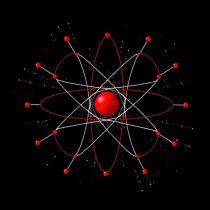
The Moon has fascinated humanity for centuries, with its desolate beauty and mysteries that continue to spark curiosity. While scientific exploration has provided extensive knowledge about the Moon’s geology and origins, several unusual and unexplained features still raise questions. From peculiar formations to unexplained lights, these moon surface anomalies have led to numerous theories about their nature and origin. Some suggest geological phenomena, while others propose extraterrestrial activity or even artificial structures.

In this comprehensive exploration, we will delve into six major moon surface anomalies that have puzzled scientists and enthusiasts alike. We’ll also examine theories about anomalies on the moon’s surface, the implications of unusual structures, and the hidden details that challenge our understanding of Earth’s only natural satellite.

1. The Shard: A Towering Mystery

One of the most famous moon surface anomalies is “The Shard,” a mysterious vertical structure first photographed by the Lunar Orbiter 3 in 1967. Located near the crater Ukert, The Shard appears to rise above the lunar surface, casting a long shadow. Its sharp, angular shape led some to speculate that it could be an artificial structure rather than a natural formation.

Skeptics argue that the image is a result of photographic artifacts or image processing errors, but the structure’s distinct shadow has kept debates alive. Proponents of unusual structures spotted on the moon suggest it could be evidence of ancient alien construction or remnants of an advanced civilization. Despite repeated studies, no definitive explanation has been agreed upon, leaving The Shard one of the Moon’s most enduring mysteries.

2. The TLP Phenomenon: Transient Lunar Phenomena

Reports of strange lights and glowing spots on the Moon date back centuries. Known as Transient Lunar Phenomena (TLP), these events are characterized by brief flashes, colored glows, or changes in brightness observed on the lunar surface. Even famed astronomer Sir William Herschel documented sightings of lights on the Moon in the 18th century.

TLPs are among the most enigmatic moon surface anomalies because they defy easy classification. Some scientists attribute these phenomena to outgassing, where gas escapes from the lunar interior, creating temporary luminescence. Others suggest meteor impacts or electrostatic effects caused by solar radiation. However, the lack of consistent evidence and the unpredictable nature of TLPs continue to fuel theories about anomalies on the moon’s surface, with some proposing advanced technology or artificial lights as potential causes.

3. The Monoliths of the Moon

Another intriguing feature linked to moon surface anomalies is the discovery of what appear to be monolithic structures on the lunar terrain. One of the most notable is a rectangular object photographed by the Apollo 16 mission in 1972. The sharp, geometric appearance of the structure sparked widespread speculation.

While natural geological formations can sometimes mimic artificial shapes, the regularity and size of these monolith-like objects have led to debates. Could they be remnants of ancient construction, or are they the result of natural processes we don’t yet understand? Advocates of unusual structures spotted on the moon believe these formations warrant further investigation to determine whether they hold clues to unknown aspects of lunar geology or more profound mysteries.

4. The Hollow Moon Theory

One of the most controversial theories about anomalies on the moon’s surface relates to its internal structure. The Hollow Moon theory suggests that the Moon may be more than just a solid celestial body. This idea gained traction after the Apollo 12 mission, during which a seismic experiment caused the Moon to “ring like a bell” for nearly an hour.

Proponents argue that such behavior indicates the presence of large, hollow spaces within the Moon, challenging traditional models of its formation. Skeptics dismiss this as a misinterpretation of seismic data, attributing the phenomenon to unique crustal properties rather than hollowness. Nevertheless, the concept remains one of the more speculative moon surface anomalies, inspiring ideas of hidden chambers or artificial construction beneath the lunar surface.

Moon Surface Anomalies

5. Unusual Crater Shapes

Most lunar craters are circular, formed by the impact of meteoroids striking the surface. However, some craters exhibit shapes and features that deviate from typical impact characteristics. One of the most debated moon surface anomalies is the hexagonal pattern observed in certain crater rims. The Aristarchus Crater, one of the brightest and most studied regions on the Moon, displays unusual angular ridges that have puzzled researchers.

Traditional geology explains these formations as the result of fracturing patterns in the lunar crust. However, the precision and symmetry seen in some cases have fueled theories about anomalies on the moon’s surface, suggesting that external influences or unknown forces could be at play. Observations from future missions may provide more definitive insights into these geometric mysteries,Moon Surface Anomalies.

6. The “Glass Domes” Theory

Another striking claim among moon surface anomalies is the idea that ancient glass-like domes once covered parts of the Moon. This theory is based on photographs showing reflective, translucent structures, particularly in the Mare Crisium and Sinus Medii regions. Advocates of the glass dome theory believe these formations are remnants of artificial habitats constructed by an unknown civilization.

Critics argue that these reflections are caused by photographic artifacts, camera lens issues, or natural mineral deposits. However, the persistence of these sightings in different missions and photographs continues to intrigue enthusiasts. If proven, the existence of such structures would drastically alter our understanding of hidden details about the moon’s surface geology and its potential past.

Evidence of Anomalies in Lunar Photographs

Many moon surface anomalies have been brought to public attention through detailed photographic analysis. Missions like the Apollo program, Lunar Reconnaissance Orbiter, and China’s Chang’e series have provided high-resolution images that reveal curious shapes and features. Some of these anomalies, such as apparent rectangular or triangular formations, have been dismissed as pareidolia—the human tendency to perceive familiar patterns where none exist.

Despite scientific explanations, certain features defy simple interpretation. For instance, the so-called “lunar spires” appear as towering structures that cast long shadows, resembling enormous vertical objects. Could these be remnants of ancient technology or natural formations shaped by forces unknown to current science? These photographic mysteries offer fertile ground for continued exploration and speculation.

The Impact of Moon Surface Anomalies on Space Exploration

The study of moon surface anomalies continues to inspire future missions. With the Artemis program aiming to return humans to the Moon, new opportunities to investigate these enigmatic features are on the horizon. Advances in imaging technology, seismic studies, and robotic exploration may finally explain some of the peculiarities observed over the decades.

If even one anomaly is proven to be of artificial origin, it would redefine humanity’s understanding of our place in the universe. Until then, the Moon remains a subject of fascination, where every photograph and data point brings us closer to unraveling its deepest mysteries.

Conclusion

Moon surface anomalies represent some of the most compelling mysteries in lunar science. From The Shard’s towering silhouette to reports of glass domes and transient lights, these features challenge conventional geology and spark theories about anomalies on the moon’s surface. While many anomalies have plausible scientific explanations, others remain open to interpretation, inviting both skepticism and wonder. As technology advances and exploration continues, the Moon may yet reveal secrets that alter our understanding of celestial phenomena and the broader cosmos.

If you want to read more:  CLICK HERE
Moon Landing Photography Controversy: 6 Shocking Questions About the Iconic Images

The Apollo moon landings remain one of humanity’s greatest achievements, but they have also been the subject of intense scrutiny and conspiracy theories. Central to this debate is the Moon Landing Photography Controversy, which questions the authenticity of the iconic images captured during the Apollo missions. Critics often point to alleged inconsistencies in the photos, such as lighting anomalies, unexplained shadows, and missing stars, as evidence of potential manipulation.

In this article, we examine 6 key questions about the Moon Landing Photography Controversy, exploring both the claims made by skeptics and the scientific explanations provided by experts. From analyzing moon landing photo inconsistencies to addressing debates over their authenticity, we delve into the details surrounding this ongoing debate.

1. Why Are There No Stars in the Moon Landing Photos?

The Controversy:

One of the most frequently cited arguments in the Moon Landing Photography Controversy is the absence of stars in the images taken on the lunar surface. Critics argue that if the moon landing photos were real, stars should be visible in the black lunar sky.

Scientific Explanation:

  • Camera Exposure Settings: The cameras used on the Apollo missions were set to capture the brightly lit lunar surface and astronauts. This required short exposure times that did not allow the faint light of stars to appear in the photos.
  • Contrast Between Light and Dark: The stark contrast between the sunlit lunar surface and the dark sky further reduced the visibility of stars in the images.

This explanation has been widely accepted by experts, though the absence of stars continues to fuel theories about moon landing photography manipulation.

2. Why Do Shadows Appear to Be Inconsistent?

The Controversy:

Skeptics of the Apollo missions often highlight the apparent inconsistencies in shadows captured in the moon landing photos. They claim that shadows cast by objects on the lunar surface appear to point in different directions, suggesting the use of multiple light sources, such as studio lighting.

Scientific Explanation:

  • Uneven Lunar Surface: The moon’s terrain is uneven, with rocks, craters, and slopes causing shadows to appear at different angles.
  • Perspective and Wide-Angle Lenses: The use of wide-angle lenses on the Apollo cameras can distort the appearance of shadows, making them seem inconsistent.
  • Single Light Source: The sun was the only light source on the moon, and its low angle created long, uneven shadows.

Despite these explanations, the issue of shadows remains a key point in the Moon Landing Photography Controversy, prompting further analysis of shadows and lighting in moon landing images.

3. Were the Images Too Perfect to Be Real?

The Controversy:

Another argument raised in the Moon Landing Photography Controversy is that the photos are “too perfect” to have been taken under the challenging conditions of the moon. Skeptics question how astronauts managed to capture such clear and well-composed images while wearing bulky suits and helmets.

Scientific Explanation:

  • Specialized Cameras: The cameras used during the Apollo missions, such as the Hasselblad 500EL, were designed specifically for space photography, with high-quality lenses and simple controls.
  • Training: Astronauts underwent extensive training in photography, practicing how to aim and frame shots without looking through a viewfinder.
  • Large Number of Photos Taken: Over 12,000 images were captured during the Apollo missions, and only the best ones were selected for public release, giving the impression of “perfection.”

The perceived flawlessness of the images has been a major focus of debates over authenticity of moon landing photos, despite logical explanations for their quality.

4. Were the Flags on the Moon Moving?

The Controversy:

Footage and photos of the American flag planted on the moon have been another source of skepticism. Critics argue that the flag appears to “wave,” despite the lack of wind on the lunar surface, suggesting it was filmed in a controlled environment.

Scientific Explanation:

  • Flag Design: The flags used during the Apollo missions included a horizontal rod along the top to keep them extended. The “waving” appearance was caused by astronauts twisting the flagpole into the ground, creating ripples in the fabric.
  • Lack of Atmosphere: The flag’s motion after being planted was due to inertia, as there is no air resistance on the moon to dampen movement.

This detail is often mentioned in the Moon Landing Photography Controversy, but the physics of the lunar environment provides a clear explanation.

5. Why Were There Reflections of Unknown Objects in Visors?

The Controversy:

Close examination of astronauts’ visors in moon landing photos reveals reflections of objects, some of which skeptics claim are inconsistent with the lunar environment. Allegations range from supposed studio lights to crew members not visible in the frame in Moon Landing Photography Controversy.

Scientific Explanation:

  • Wide Field of View: The convex shape of the visors in Moon Landing Photography Controversy creates a wide field of reflection, capturing objects behind and around the astronauts.
  • Environmental Objects: Reflections often show parts of the lunar module, other astronauts, or equipment that are not immediately obvious in the main frame of the image.

While reflections are cited in theories about moon landing photography manipulation, they are consistent with the equipment and conditions on the moon.

Moon Landing Photography Controversy

6. What About Hidden Details in the Photos?

The Controversy:

Some conspiracy theorists argue that hidden details in Apollo moon landing images point to forgery. These include claims of artificial lighting, visible wires, or discrepancies in the lunar surface texture.

Scientific Explanation:

  • Artificial Lighting Claims: Bright spots or reflections in the images are often due to the reflective nature of the moon’s surface and the astronauts’ suits.
  • Wire Allegations: Claims of visible wires have been debunked as lens flares or photographic artifacts.
  • Texture Variations: The moon’s surface varies naturally due to its geology, and high-resolution cameras captured this detail accurately.

The scrutiny of hidden details remains a hallmark of the Moon Landing Photography Controversy, despite repeated debunking by experts and scientists.

Broader Impact of the Moon Landing Photography Controversy

The Moon Landing Photography Controversy highlights the enduring fascination and skepticism surrounding one of humanity’s greatest achievements. While many of the claims made by skeptics have been thoroughly debunked, the controversy persists due to mistrust of authority, the complexity of space exploration, and the appeal of conspiracy theories.

Consequences:

  • Erosion of Trust: The controversy has fueled broader doubts about government transparency and scientific institutions.
  • Pop Culture Influence: Theories about manipulated moon landing images have become a staple of documentaries, movies, and online debates.
  • Advancing Science: Ironically, the scrutiny has led to advancements in imaging analysis and public understanding of space photography.

Addressing these questions requires a commitment to evidence-based reasoning and a willingness to engage in open dialogue about the facts.

Conclusion

The Moon Landing Photography Controversy exemplifies the intersection of skepticism, science, and public fascination. From debates about missing stars to the mechanics of shadows and reflections, these questions have kept the Apollo missions in the spotlight for decades.

While skeptics continue to raise concerns about moon landing photo inconsistencies, experts consistently provide logical and scientific explanations that reinforce the authenticity of these iconic images. As technology advances and new space missions are undertaken, the lessons of this controversy remind us of the importance of critical thinking and trust in scientific discovery.

If you want to read more:  CLICK HERE

Apollo Program Skepticism: 5 Shocking Reasons Some Question the Missions

The Apollo Program, which famously landed humans on the moon between 1969 and 1972, is one of humanity’s greatest scientific achievements. However, despite its historical significance and the vast amount of evidence supporting its success, Apollo Program skepticism persists among a segment of the population. Conspiracy theories questioning the authenticity of the moon landings have circulated for decades, raising debates about the validity of NASA’s missions and the motivations behind potential deception.

In this exploration, we delve into five reasons that fuel Apollo Program skepticism, examining claims about inconsistencies, perceived anomalies, and alternative explanations. We will also discuss NASA’s responses to Apollo mission doubts and evaluate how science addresses these lingering controversies.

1. Perceived Anomalies in the Moon Landing Footage

One of the most frequently cited arguments in Apollo Program skepticism relates to the visual anomalies in photographs and video footage from the moon. Critics point to specific elements in the imagery that they believe contradict what should be possible in the lunar environment.

Shadows and Lighting Inconsistencies

Skeptics argue that shadows in the moon landing images appear to fall in multiple directions, suggesting artificial lighting rather than sunlight. Since the moon has only one light source—the sun—theories about Apollo program authenticity claim that these discrepancies indicate a staged set on Earth. However, experts in photography and optics have explained that uneven lunar terrain and the reflective nature of the moon’s surface can cause shadows to appear non-parallel. This phenomenon is consistent with known physics and does not require artificial lighting to explain it.

The Waving Flag

Another key point of Apollo Program skepticism is the iconic image of the American flag appearing to wave on the moon’s surface. Since there is no atmosphere on the moon, skeptics argue that the flag could not flutter unless manipulated by air movement in a studio. However, NASA engineers designed the flag with a horizontal support rod to keep it extended. The apparent movement occurred as astronauts adjusted the pole, causing ripples that remained visible due to the lack of atmospheric resistance to dampen the motion.

Apollo Program Skepticism

2. Radiation Exposure in the Van Allen Belts

Skeptics often raise concerns about the Van Allen radiation belts, zones of high-energy particles trapped by Earth’s magnetic field. They argue that astronauts traveling through these belts would have been exposed to lethal levels of radiation, making a successful journey to the moon impossible without advanced shielding technology that did not exist in the 1960s. This claim is a cornerstone of evidence supporting Apollo program skepticism.

However, scientific analysis refutes this concern. NASA carefully planned the Apollo missions to minimize radiation exposure by choosing trajectories that reduced time spent in the belts. The spacecraft’s aluminum hull provided sufficient protection for the short duration of the transit. Dosimeters aboard the missions measured radiation levels, confirming that the doses received were well within safe limits. Space agencies continue to study radiation exposure, validating the original data from the Apollo missions, Apollo Program Skepticism.

3. The Lack of Stars in Moon Photographs

One of the most popular points in Apollo Program skepticism is the absence of stars in photographs taken on the lunar surface. Skeptics argue that if astronauts were truly on the moon, the black sky should have been filled with visible stars. The omission of these celestial objects is presented as evidence of studio staging.

Photography experts explain this phenomenon as a consequence of camera settings. The bright lunar surface and the astronauts’ white suits required short exposure times to avoid overexposure. As a result, the dim light of distant stars was not captured in the images. Modern photography experiments have reproduced this effect, supporting NASA’s explanations.

4. The Complexity of the Moon Landing Technology

The Apollo missions required advanced technology, from the Saturn V rocket to the lunar module and life-support systems. Some skeptics question whether NASA had the technical capability to achieve such feats with 1960s technology, fueling theories about Apollo program authenticity.

Critics argue that the complexity of synchronizing spacecraft maneuvers, ensuring life support, and returning safely to Earth would have been insurmountable. However, NASA’s achievements were the result of extensive research, rigorous testing, and collaboration among the world’s top scientists and engineers. Thousands of people worked on the Apollo Program, contributing specialized knowledge that made the missions possible. Independent reviews of the technology, including analysis of Saturn V’s design and performance, consistently affirm its capability.

5. The Secrecy and Motivation for a Hoax

One of the central arguments driving Apollo Program skepticism is the idea that NASA had strong political motivations to fake the moon landings. Skeptics point to the intense Cold War rivalry between the United States and the Soviet Union, suggesting that a staged landing would have been an effective way to demonstrate American technological superiority without the risks of actual space travel.

Proponents of this theory often highlight the secrecy surrounding certain aspects of the Apollo Program. However, NASA’s responses to Apollo mission doubts emphasize that the sheer number of people involved in the missions would make a large-scale conspiracy nearly impossible to maintain. Independent verification from global tracking stations, including facilities in Australia and Spain, also supports the authenticity of the missions. The Soviet Union, which had the capability to detect fraud, never challenged the validity of the moon landings, further undermining claims of a hoax.

The Role of Misinformation and Pop Culture

Apollo Program skepticism has been amplified by popular culture and misinformation. The 1978 movie Capricorn One, which depicted a faked Mars landing, fueled public imagination about space hoaxes. Similarly, internet forums and documentaries like Room 237 have presented conspiracy theories as legitimate alternatives to scientific consensus, often without rigorous evidence. The rise of social media has further propagated these ideas, making it easier for misinformation to spread.

Evidence Supporting the Reality of Apollo Missions

Despite the persistence of Apollo Program skepticism, extensive evidence supports the reality of the moon landings. Lunar samples collected during the missions have been studied by scientists worldwide, revealing unique properties consistent with an extraterrestrial origin. Reflectors placed on the lunar surface during Apollo missions are still used today for laser-ranging experiments, providing further confirmation of human activity on the moon.

High-resolution images captured by NASA’s Lunar Reconnaissance Orbiter show the landing sites, including the footprints, rover tracks, and equipment left behind by astronauts. These observations are independently verified by other space agencies, reinforcing the historical record.

Why Skepticism Persists

The endurance of Apollo Program skepticism is often attributed to a general mistrust of government institutions, a fascination with hidden truths, and the appeal of questioning official narratives. Cognitive biases, such as the tendency to prefer simple explanations over complex realities, also contribute to the popularity of conspiracy theories. Additionally, the technical complexity and extraordinary nature of the moon landings make them inherently susceptible to disbelief.

Conclusion

Apollo Program skepticism reflects broader themes of mistrust, curiosity, and the human tendency to question remarkable achievements. While the claims made by skeptics often stem from misunderstood science or misinformation, the rigorous evidence supporting the Apollo missions remains overwhelming. Understanding the motivations behind skepticism helps promote critical thinking, media literacy, and an appreciation for the monumental accomplishments of space exploration.

If you want to read more:  CLICK HERE
Quantum Field Studies: 6 Revolutionary Breakthroughs in Modern Physics

Quantum field theory (QFT) is the foundation of modern physics, combining quantum mechanics and special relativity to describe how particles interact and behave in a universe governed by fields. By studying the fundamental forces of nature, quantum field studies have led to groundbreaking discoveries, from explaining particle interactions to exploring energy dynamics in unprecedented ways.

In this article, we’ll delve into 6 major breakthroughs in quantum field studies that have advanced our understanding of particle physics, energy, and the structure of the universe. Along the way, we’ll explore how these discoveries impact scientific research and technological innovation, showcasing the immense potential of quantum field studies in shaping the future of physics.

1. The Higgs Boson: Proof of the Quantum Field

The Breakthrough:

The discovery of the Higgs boson in 2012 at CERN’s Large Hadron Collider marked one of the most significant achievements in quantum field studies. This elusive particle provided evidence for the Higgs field, a quantum field that gives particles their mass.

Why It Matters:

  • The Higgs field is a cornerstone of the Standard Model of particle physics, helping explain why fundamental particles have mass.
  • Its discovery confirmed decades of theoretical predictions, validating the interplay between quantum fields and particle interactions.

Broader Impact:

This breakthrough demonstrated the power of quantum field studies and energy dynamics, as the Higgs boson’s behavior sheds light on how energy converts into mass—a principle central to Einstein’s famous equation, E=mc2E=mc^2E=mc2.

Quantum Field Studies: 6 Revolutionary Breakthroughs in Modern Physics

2. Quantum Electrodynamics (QED): The Most Accurate Theory in Physics

The Breakthrough:

Quantum electrodynamics (QED) is a branch of quantum field studies that describes how light and matter interact through the electromagnetic force. It is renowned for its unmatched precision in predicting experimental results.

Key Achievements:

  • QED successfully explains phenomena like the scattering of photons and electrons.
  • The theory’s predictions have been confirmed to an extraordinary degree of accuracy, with experiments matching theoretical calculations to within 10 decimal places.

Why It Matters:

  • QED serves as the blueprint for other quantum field theories, inspiring further research into particle interactions and energy dynamics.
  • Advances in quantum field studies and energy dynamics stemming from QED have applications in areas like quantum computing and high-energy physics.

This breakthrough highlights the precision and predictive power of quantum field theories in describing nature at its most fundamental level.

3. Renormalization: Tackling Infinite Values in Physics

The Breakthrough:

One of the key challenges in quantum field studies is dealing with infinities that arise in calculations. Renormalization, a mathematical technique, addresses this issue by redefining physical constants to produce finite, meaningful results.

Why It Matters:

  • Renormalization enables physicists to make accurate predictions about particle interactions, even in complex systems.
  • It played a crucial role in the development of QED and quantum chromodynamics (QCD), the theory of the strong nuclear force.

Broader Implications:

By refining how we understand particle behavior, renormalization has become a cornerstone of modern physics, allowing for deeper insights into theories of quantum fields and particle interactions.

4. Quantum Chromodynamics: Understanding the Strong Force

The Breakthrough:

Quantum chromodynamics (QCD) is the branch of quantum field studies that describes the strong nuclear force, which binds protons and neutrons in atomic nuclei. It explains how quarks, the building blocks of protons and neutrons, interact through the exchange of gluons.

Key Insights:

  • QCD introduces the concept of “color charge,” a property of quarks and gluons analogous to electric charge in electromagnetism.
  • The theory explains confinement, where quarks cannot exist in isolation, and asymptotic freedom, where quarks interact weakly at high energies.

Applications:

Understanding the strong force through QCD has implications for nuclear energy, particle accelerators, and applications of quantum field studies in physics, such as studying the behavior of exotic particles.

This breakthrough underscores how quantum field studies provide a deeper understanding of the forces that govern matter at its smallest scales.

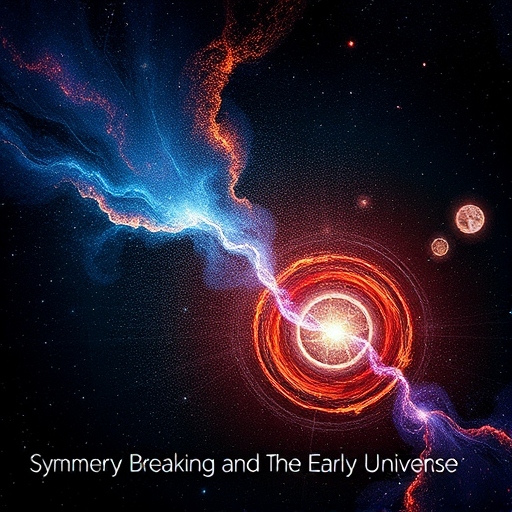
5. Symmetry Breaking and the Early Universe

The Breakthrough:

Symmetry breaking, a phenomenon where symmetrical states transition into asymmetrical ones, is a critical concept in quantum field studies. It plays a key role in explaining the universe’s formation and evolution.

Why It Matters:

  • During the early moments of the Big Bang, symmetry breaking gave rise to the distinct forces of nature (electromagnetic, weak, strong, and gravitational).
  • This process also explains the uneven distribution of matter, leading to the formation of galaxies, stars, and planets.

Broader Implications:

Symmetry breaking connects quantum field studies and energy dynamics to cosmology, offering insights into the origins of the universe and the fundamental nature of reality.

This breakthrough highlights how quantum field studies extend beyond particle physics to address questions about the cosmos.

6. Applications of Quantum Field Studies in Technology

The Breakthrough:

While many aspects of quantum field studies focus on theoretical physics, their principles are driving innovations in technology and engineering.

Key Applications:

  • Quantum Computing: Quantum field theories are inspiring the development of quantum algorithms and qubits, enabling faster, more efficient computing.
  • Materials Science: Research into quantum fields is helping create advanced materials, such as superconductors and metamaterials, with unique properties.
  • Medical Imaging: Techniques like PET scans rely on principles derived from quantum field studies and particle interactions to detect diseases.

Broader Impact:

These applications demonstrate how advances in quantum field studies are transforming everyday life, from healthcare to communications and beyond.

The Growing Potential of Quantum Field Studies

As scientists continue to explore the depths of particle physics, quantum field studies remain a driving force behind some of the most exciting discoveries in modern science. From unraveling the mysteries of the Higgs boson to pushing the boundaries of technological innovation, these studies are reshaping our understanding of the universe.

Broader Implications:

  • Fundamental Knowledge: Quantum field studies reveal the mechanisms behind the universe’s forces and particles, addressing questions that have puzzled humanity for centuries.
  • Technological Progress: The principles of quantum fields are fueling advancements in computing, energy, and medicine.
  • Collaborative Research: International projects like CERN’s Large Hadron Collider highlight the global effort to uncover the secrets of quantum field theory breakthroughs in science.

As we look to the future, the field holds immense promise, from probing the nature of dark matter to unifying the fundamental forces through quantum gravity.

Conclusion

Quantum field studies are at the heart of modern physics, providing a framework for understanding the interactions between particles, forces, and energy. Through breakthroughs like the discovery of the Higgs boson, advancements in QED and QCD, and applications in technology, these studies have revolutionized science and opened new frontiers of knowledge.

By bridging theory and application, quantum field studies continue to inspire innovation and collaboration, ensuring their place as one of the most transformative areas of scientific research in the 21st century.

If you want to read more:  CLICK HERE

Controlled Demolition Claims: 6 Theories About the World Trade Center Collapse

The collapse of the World Trade Center towers on September 11, 2001, remains one of the most debated events in modern history. While the official explanation, supported by investigations like those conducted by the National Institute of Standards and Technology (NIST), attributes the towers’ collapse to the impacts of hijacked airplanes and the resulting fires, controlled demolition claims suggest an alternate narrative. Proponents of these claims argue that explosives or other deliberate methods were used to bring down the towers, fueling ongoing controversy and conspiracy theories.

In this article, we explore 6 theories about controlled demolition claims, examining the arguments, evidence, and counterpoints that define this enduring debate. From the structural analysis of controlled demolitions to allegations of hidden truths about the Twin Towers collapse, these theories provide a glimpse into one of the most polarizing topics surrounding 9/11.

1. Free-Fall Speed and Symmetry of the Collapse

The Theory:

One of the central controlled demolition claims is that the Twin Towers and World Trade Center 7 (WTC 7) fell at speeds consistent with free-fall, suggesting that explosives must have been used to eliminate structural resistance.

Key Arguments:

  • The near-vertical and symmetrical collapse of the buildings is seen as indicative of controlled demolition.
  • Videos of the collapses show dust and debris being expelled outward, which proponents argue resemble demolition squibs (explosive bursts).

Evidence Presented by Advocates:

  • Supporters cite video analysis suggesting portions of WTC 7’s collapse occurred at free-fall acceleration.
  • Eyewitnesses, including first responders, reported hearing explosions before the collapses.

Counterpoints:

  • NIST’s official report attributes the collapse of the Twin Towers to fire-induced weakening of steel and the subsequent “pancaking” of floors.
  • The outward bursts of dust can be explained by compressed air and debris as the structures collapsed.

The structural analysis of controlled demolitions versus fire-induced collapses remains a key battleground in this debate.

Controlled Demolition Claims

2. Thermite Residue and Explosive Evidence

The Theory:

Advocates of controlled demolition claims often point to alleged traces of thermite, a chemical compound used in demolition, found in the debris of the Twin Towers.

Allegations:

  • Researchers have claimed to identify microscopic particles of thermite or nanothermite in dust samples from Ground Zero.
  • The presence of molten steel in the rubble is cited as further evidence of explosives, as the fires alone could not have reached temperatures high enough to melt steel.

Counterpoints:

  • Critics argue that the alleged thermite evidence is inconclusive and that the materials identified could result from the high-temperature fires and building materials.
  • NIST’s report states that the steel in the Twin Towers weakened, not melted, which led to the collapse.

While this theory is a cornerstone of theories about explosives in the Twin Towers, it has faced significant scientific scrutiny.

3. WTC 7: The Smoking Gun?

The Theory:

The collapse of WTC 7, a 47-story building not directly hit by a plane, is one of the most frequently cited pieces of evidence supporting controlled demolition and 9/11 conspiracy theories.

Key Points of Debate:

  • WTC 7 fell at near-free-fall acceleration, which skeptics argue is impossible without explosives.
  • The building’s symmetrical collapse has been compared to classic controlled demolitions.

Evidence Cited:

  • A controversial statement by Larry Silverstein, the leaseholder of the WTC complex, in which he said, “We decided to pull it,” is often interpreted as an admission of demolition. Silverstein later clarified that he meant pulling firefighters from the area, Controlled Demolition Claims.
  • Eyewitness accounts of explosions prior to the collapse have added fuel to the theory.

Official Explanation:

  • NIST attributes WTC 7’s collapse to uncontrolled fires ignited by debris from the Twin Towers’ collapse, causing a critical structural column to fail, Controlled Demolition Claims.

The collapse of WTC 7 remains a focal point for allegations of hidden truths about the Twin Towers collapse.

Controlled Demolition Claims

4. Evidence of Pre-Planted Explosives

The Theory:

Another controlled demolition claim involves the alleged use of pre-planted explosives throughout the Twin Towers, strategically placed to ensure their collapse.

Allegations:

  • Explosives were reportedly planted in the weeks or months leading up to 9/11 under the guise of maintenance work.
  • Skeptics argue that the towers’ cores and perimeter columns would have required such precise weakening to collapse in the observed manner.

Counterarguments:

  • Experts argue that planting explosives in two fully occupied buildings without detection would have been nearly impossible.
  • Controlled demolitions typically involve extensive preparation, which would have likely left clear evidence in the aftermath.

This theory hinges on the feasibility of pre-planting explosives, which remains one of the controversies surrounding controlled demolition claims.

5. Eyewitness Reports of Explosions

The Theory:

Eyewitness testimony from first responders, survivors, and journalists describing explosions before and during the collapses is often cited as evidence for controlled demolition claims.

Key Testimonies:

  • Many witnesses reported hearing loud bangs or explosions, with some comparing them to controlled demolitions.
  • Audio recordings from the scene also captured sounds resembling blasts.

Counterarguments:

  • Experts attribute these sounds to structural failures, such as floors collapsing and air pressure being expelled through windows.
  • Explosions from transformers or fuel tanks within the buildings could also account for the noises.

While eyewitness accounts are compelling, they are not considered definitive evidence in the absence of corroborating physical proof.

Controlled Demolition Claims

6. The Role of Media in Shaping Narratives

The Theory:

Proponents of controlled demolition and 9/11 conspiracy theories often accuse the media of suppressing evidence and promoting the official narrative.

Allegations:

  • Critics claim that mainstream media outlets ignored or downplayed evidence supporting controlled demolition theories.
  • They argue that alternative theories are dismissed as conspiracy theories without serious investigation.

The Role of Alternative Media:

  • Independent journalists and online platforms have played a significant role in keeping these theories alive, offering counter-narratives to the official story.

Counterpoints:

  • Media coverage has largely focused on evidence and findings from official investigations, which have been vetted by scientific and engineering experts.
  • Skeptics argue that many alternative theories lack credible evidence, which justifies their dismissal.

This debate reflects the broader struggle over public trust and the framing of hidden truths about the Twin Towers collapse.

Broader Implications of Controlled Demolition Claims

Belief in controlled demolition claims has far-reaching consequences for public perception, trust in institutions, and societal cohesion.

Impacts:

  • Erosion of Trust: Skepticism about the official narrative contributes to broader distrust of governments and media.
  • Polarization: The debate over 9/11 has divided communities, with some viewing skeptics as truth-seekers and others as conspiracy theorists.
  • Continuous Investigation: The persistence of these claims underscores the need for transparency and rigorous communication of scientific findings.

Efforts to address these claims require open dialogue, credible evidence, and respect for differing perspectives.

Conclusion

The collapse of the World Trade Center towers continues to inspire debate, with controlled demolition claims forming a central part of the conversation. From evidence supporting controlled demolition claims to the controversies surrounding the collapse of WTC 7, these theories highlight the complexity of understanding such a catastrophic event.

While the official explanations provide detailed scientific and engineering analyses, the persistence of alternative narratives reflects deeper societal concerns about trust, transparency, and the search for truth. By engaging in open and respectful dialogue, we can better navigate the complexities of these debates and honor the memory of those affected by the events of September 11, 2001

If you want to read more: CLICK HERE